Showing posts with label Harry Potter. Show all posts

Obvious statement: there are things to love and things to hate about the new Harry Potter movie. Some changes they made, such as the shield around the castle, were fun and even sensible. Others, such as the omission of the confrontation in the Ravenclaw Common Room and the long, drawn out fight against Voldemort at the end, were disappointing and aggravating. But what disturbs me is what happens when we line certain changes next to each other.

The changed parts under consideration:

- Hermoine speaking to Griphook
Hermoine never mentions to Griphook how she is as much an outsider to Voldemort as goblins are, as she is a Mudblood.
- Neville filling Harry & co. in as to what has happened at Hogwarts
Neville fails to mention how Muggle Studies has changed to how Muggles are inferior creatures. Furthermore, the Cruciatus Curse is used on first years instead of Muggle-born students.
- The Snape flashback
Snape’s anti-Muggle prejudice is omitted, as is his memory of calling Lily a “mudblood.” Instead of becoming a complex, flawed character who is still a bigot, he becomes another savior figure. Lily’s understandable (though tragic) choice to leave Snape is undone and instead she is a fickle girl who goes for the hot jerk. Rowling in an interview said that that was the moment where Snape lost Lily. Thus the film omitted from Snape’s past what was probably its most crucial moment.
- Dumbledore’s backstory
There is no mention of Grindelwald’s backstory, leaving us no idea how Dumbledore got the Elder Wand. Furthermore, this means that there is no mention of Grindelwald’s “Muggles are inferior” beliefs, nor can there be any allusions to Dumbledore’s love.
- Neville’s stand against Voldemort
Voldemort does not commend Neville’s status as a wizard from a pureblood family. Also, Neville gives a long speech about how Harry’s heart lives inside of everyone even if he is dead.
- Luna and Neville end up together
This addition not only is never alluded to in the books, but even goes directly against who Rowling said the two marry in interviews.

Any of these parts taken under consideration individually would seem reasonable perhaps. I might take umbrage (or even Umbridge) at the grotesque mishandling of Snape’s backstory and Neville’s Oscar speech, which was a heavy-handed waste of time that could have better been used showing Harry repairing his original wand, but whatever. However, when all of these are lined up together, we see a systematic deletion of the Pureblood agenda from the last film.

This deletion is pretty surprising, especially when one considers that this is the central ideological conflict of the book series. The final movie would make one believe that the fight is not about a pureblooded Wizard community vs. an inclusive one, but simply the Evil Wizards vs. Harry Potter (as underlined by Neville’s speech).

The bad Wizards must be exterminated so that the good ones may live. Harry never tries to reason with Voldemort. He does not try to get him to repent to save his soul. We do not even know in this version if he casts the harmless “expelliarmus” when he kills Voldemort. Harry in this version is out for blood, as are many of the “good guys.” This film is not one about tolerance; it’s one about cleaning house. It’s not a film about inclusivity; it’s about getting rid of everyone who stands in your way. Even the Malfoys don’t have a place at table in the final celebration.

Why is this film giving up Rowling’s message of tolerance, a message so prevalent in the books I used to accuse it of being heavy-handed? Because, ultimately, this film is a very conservative film. In this climate of tea-partiers running Congress and Mormon vampire tales ruling the box office, perhaps a bleeding heart film about love of those who are different is not the smartest financial strategy. Notice that the filmmakers even ensure that Dumbledore cannot be gay, since he has no one in his backstory with whom to be gay. There must not be the slightest hint of anything that could keep the red states from inflating the box office gross.

Bigotry is fine. It is not a trait of the bad guys. It’s not directed against the good, smart people like Hermione. It is not something that could lose you the love of your life. It will never try to tempt you to the wrong side by telling you that you would benefit from it. Perhaps bigotry is more than fine…perhaps it just doesn’t exist.

So what does the film leave us in its place? The compulsive, aggressive heterosexual coupling we see enforced on Neville and Luna (a single boy and a single girl can never just be friends!). And we now have a new enemy. We have the flamboyant, foppish Other, whose skin and facial structure is very different from the straight, white kids he is terrorizing. Instead of Hitler, Voldemort is everything that Hitler would decry in a frantic speech. He is a freak of nature, a sexual pervert who in a moment of near-pedophilia gets grabby with Draco Malfoy (again, not in the book!). In the final fight, he ties up Harry like a good bondage master and terrorizes the other children with his very large, very aggressive…snake.


Note how daintily Voldemort holds his wand

Thus we have Voldemort as the abject figure. The abject racial other. And the abject homosexual who endangers the future. Lee Edelman in No Future argues that:

…in the uncannily intimate connection between Harry Potter and Lord Voldemort [we see in the Child] a Symbolic resistance to the unmarried men…who embody, as Voldemort’s name makes clear, a wish, a will, or a drive toward death that entails the destruction of the Child. (Edelman 21)

Edelman wrote No Future before the final three Harry Potter books were released, three books which turned the tables, making Voldemort the one obsessed with living forever, whereas Harry underwent a thanatopsis. In the final book, we learned that no one should want to live forever, that to be a true master of Death is to accept its inevitability.

The movie however fulfills Edelman’s argument. Harry never really dies. Instead, futurity is hammered into our heads. Neville’s speech leads us to believe that even when hit with an Avada Kedavra curse, Harry still lives. Everyone carries a piece of Harry. Whereas the book had Harry “die” to protect the people of Hogwarts with his love, the film has Harry “die” only to turn every person at Hogwarts into his Horcrux. Voldemort is right; only one person can live forever. That person is Harry. The Child, the eternal enemy of the abject queer, will live forever. Any maturity he gains along the way, from his acceptance of his mortality to his tolerance of his enemies, must be forgotten, just as any of Peter Pan’s memories must be for the sake of his eternal childhood.


Thus, in the wake of the absent messages of tolerance, we see a film made with Death Eater ideology. A film of seeking eternity at the sake of others, a film of expelling everyone who is different from you, a film of victory through brute force, a film of omissions of difference and celebrations of purity. And, to the defense of the filmmakers, it worked. Through such careful planning, they offended no one. The offense is not even clear except when placed carefully against the book. Instead, everyone loves it and the film is on its way to earning enough money to warrant a rather large vault in Gringotts.

Another month, another holiday, another list of ten. In honor of Easter, I have decided to take this time to celebrate my ten favorite methods of resurrection in fiction! Originally, I was going to do my ten favorite resurrected characters, but there are just too many of them. And, for those of you offended, just think: I could have done worse. I couldn't think of too many freed slaves I love to honor Passover. Only really Mammy from Gone with the Wind. Yes, Dobby counts as one, but who actually liked him? I know; no one! And then people cried all sadly when he died! But I assure you, no one would like to see him employ any of these methods.

Fakin’ It

Offenders: Laura Fairlie (The Woman in White), Madeleine Elster (Vertigo), Sinestro (Green Lantern), Laura Bristow (Alias), Aunt May (Spider-Man)

This method of resurrection is a cohort of either very strong plotting or very lazy retconning. In novels and movies, it often serves a larger purpose than simply allowing the writer the shock and dramatics of killing off a character only to use him or her later in the story. The results of the death and the discovery of the deception are the source of narrative tension and therefore the story would be weaker with an actual shuffling loose the mortal coil.

However, this method is also famous in comic books and many television shows as a way for writers to bring back characters that they were annoyed at their predecessors for eradicating. A death certificate sometimes is less valuable than a Blockbuster gift certificate (the worst of all gift certificates). The person in question could have been secretly carried away from the plane wreck or had a secret compartment in the building just as the bomb went off. The writer could be particularly creative (read: ludicrous) and fabricate reasons like “Ah! But you killed a hard-light construction of me I engineered in order to drive you further to the brink of madness!” Yes, that is a real reason used.

In short, Fakin’ It is rife with dichotomies. The recently-resurrected could have instrumented the plan or been a victim of it. It is almost certainly the case if there is no corpse but cannot be ruled out even if there is one. And, most oddly, it has simultaneously been behind some of the greatest films and biggest eyerolls of all time.

Army of Me

Offenders: Ayanami Rei (Neon Genesis Evangelion), Hank and Dean Venture (The Venture Bros.)

You get to have your corpse and eat it too. Or something like that. I suppose you could eat the corpse. The beauty of this convention is that it proffers all the joy of the bloody death (no escape hatch or faked allergy to honey) without requiring some hokey way to have a character drive Charon’s ferry in reverse. The character does die and does not come back from the dead…but you still get to enjoy their company. Why? Because some lovely figure (be it the writer or head of a government agency or both) had the foresight to store a few spare copies of this person just in case. This method also then invites all fun introspections on “What is a self?,” which intro to philosophy college students can gush over for hours!

Messiah Complex

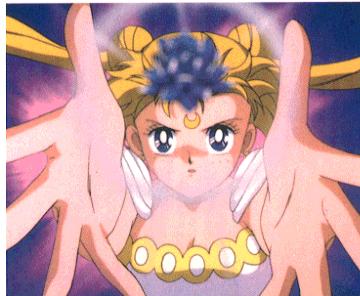
Offenders: Neo (The Matrix), Aslan (The Chronicles of Narnia), Sailor Moon (Sailor Moon)


Word to the wise: if you find yourself in a world with superpowers (oh, let’s say the guy you’re with can leap over skyscrapers or you have a piece of enchanted lipstick that turns you into a pyrokinetic superheroine), you really should not be all that cautious when approaching the subject of your mortality. Honestly, you should just assume that shuffling loose this mortal coil is a pretty much akin to landing in jail in the early stages of Monopoly. It will be an inconvenience, but it’s not the end of the world (neither, for that matter, is the end of the world). This point is particularly salient if you were to find yourself dying because you were nobly sacrificing your life for the greater good. That’s a “get out of jail free” card right there. There’s no way you’re going to stay dead. None. You pretty much hit the jackpot in Pascal’s Wager and won not only the glory for being such a noble, good being, but also that precious little thing called life.

Only Mostly Dead

Offenders: Westley (The Princess Bride), Norman Osborn (Spider-Man), Morph (X-Men: The Animated Series)


They say that if there’s no body, there is no death. Well, sometimes, if there is a body, there’s still no death. As Miracle Max explains, there’s dead and there’s mostly dead. Mostly dead allows for the shock of the death and perhaps even the loss of a heart-beat/heart, but without the irritating finality of death. Mostly dead is very similar to “Fakin’ It” (in fact Norman does a little of both), but more often than not lacks the possibility of preplanning by the writer (with the exception of Westley) and is a frequent enough device that it deserves its own category.


I’m a Dark Lord. ‘Nuff said.

Offenders: Sauron (Lord of the Rings), Voldemort (Harry Potter), Dr. Doom (Fantastic Four), Megatron (Transformers)

Word to the wise part deux: beings of unimaginable evil and power always come back after their first death, even more evil and more powerful. If you and your friends have just defeated the Great Terror Lord of Gonthrax, you should not be celebrating. If anything, you should be even more worried! All you have accomplished is chaperoning your calamitous caterpillar into the pernicious pupa stage of his metamorphosis of malevolence (where he will then reemerge as a bloodthirsty butterfly)! Granted, I do not know what the implications of this fact are when applied to the best-selling novel, The New Testament, considering we have the death of a powerful being with multiple supporters, only to reemerge a few days later even more awe-inspiring. Maybe Jesus was actually the first Sauron. And all poor Judas wanted to do was pull a Peter Pettigrew and atone for his alliance with wickedness.


I know, I know…I just committed a mortal sin; I confused Harry Potter with Lord of the Rings.

We Don’t Need No Stinkin’ Explanations!

Offenders: Daffy Duck (Looney Tunes), the crew of Sealab (Sealab 2021), Action League Now! (Kablam!)

How does Daffy survive a gun-shot to the face (or a visit to Hell at the end of some episodes)? How does the Flesh reconstruct himself after being blended, run over by an SUV, exploded, crush by a block of concrete, etc.? How do the denizens of Sealab continuously survive the undersea holocaust and rebuild their home (and don’t say there is no continuity, because they reference past episodes)? WHO CARES?! Look at all the stupid explanations there are for characters coming back to life: Horcruxes, clones, lookalike twins, magical flowers, bullets that send people through time, cocoons at the bottom of the Atlantic Ocean – sometimes the best explanation is no explanation. You know what they say: if you don’t have anything half-credible to say, don’t say anything at all.

Hell-bent on Slaughter

Offenders: Michael Myers (Halloween), Jason (Friday the 13th), Freddy Kreuger (Nightmare on Elm Street)

This category is almost a subsection of Daffy’s category. Personally, I am not as well-versed on slasher movies as I should be; I’ve only seen the first one of each series. Of course, I have never really surmised that all that much energy is devoted to concocting reasons as to why that axe didn’t fully sever Michael’s head or how Jason survived the room of a thousand dynamites. All that matters is that these creatures have one reason to live: to exenterate the insides of every horny teenager on the planet. And, clearly, there are still horny teenagers out there. In fact, they’re multiplying in numbers! And sometimes this very increase in numbers is due to, you guessed it, horny teenagers! These guys can’t give up on their duty! They have a varsity-level commitment that I only wish I had back when I did track. Death to them is like a few broken bones to an Olympic gold medalist: enough of a reason to pause for a moment, but that’s it. Afterwards, they slap on some duct tape, grit their teeth, and continue the chase. And good for them!

(I can express such sentiments since, as a horny 23-year old, I’m pretty sure I’m exempt from their eviscerations)

I Had an Extra Guy!

Offenders: Pac-Man (Pac-Man), Mario (Super Mario Bros), Sonic the Hedgehog (Sonic the Hedgehog)

Man, wouldn’t the world be an interesting place if you had multiple deaths before you truly died? I know that The Onion did an investigation on the personal psychological implications of such a reality…but there is so much more. Would people sell their extra guys (or green mushrooms, etc.) in times of economic distress, leading the rich to become nigh-immortals? Or, in fact, would people be born with different amounts of extra lives, which in turn would decide their level in society?

Oh, the possibilities for anti-utopian novels are endless!

Lazy Writing/The Fans Demanded It/Cocoon in Ocean

Offenders: Hal Jordan (Green Lantern), Barry Allen (Flash), Bucky (Captain America)

Okay, so usually the writer will ultimately fall back on one of the aforementioned categories or a particularly special case of “cocoon in ocean” (yes, I already mentioned that, but it’s SO freakin’ stupid!). But some cases of resurrection are far more transparent than others. While I can half-buy into certain cases of averted death, there are points where the movie or telev – oh who am I kidding, comic book writer should just devote a few panels to his hand reaching into the grave and picking the dead character out of it before imbuing life back into him or her. Because, no, Barry Allen isn’t alive because of the Speed Force…that is unless Speed Force is “Geoff Johns wants it to be the Silver Age” in another language. What? Grant Morrison wrote that story? No, not believing it. Because, to be fair, Morrison is probably the only one who executed my suggestion. Seriously. Read Animal Man sometime.

It’s My Other Mutant Power

Offenders: Pretty much everyone who has every graced the pages of X-Men

I could pretty much populate this entire list with mutants. Fakin’ It? Yup, Magneto has done that so many times he should probably meet with Dr. Ruth. Clones? Uh-huh. Even if you’re an X-Men and aren’t Multiple Man, a cosmic, nigh-omnipotent deity will provide a few clones of you just to ensure you can die tragically and still come back to grace the shiny variant covers of issue 300. And don’t even get me started on the last category I just discussed.

I’m relatively certain by this point that one of the prerequisites for joining the X-Men is that the potential member in question has to have died at least once. That must be what X-Force, X-Factor, Generation X (oh, am I dating myself?), and all those other teams are force: acquainting the next class of mutants with the concept of their own mortality and their mortality’s mortality. The X-Men are the most elite group of mutants out there; they cannot be wasting their time dealing with death-virgins who actually get worried when a Sentinel beam fries Cyclops. Come on!


Did I miss any of your favorites?

Happy St. Patrick’s Day everyone! While I could do an entry on favorite Irish characters or green stuff or best movies with carbombs, I have chosen instead to do something far classier and more appropriate to honor such a special day for my fellow Irish-Americans. Without further adieu, I give you the ten fictional places at which I would most want to get drunk!

The rules:
1. The place has to be fictional (not a real place that appears in a fictional context).
2. There has to be some precedent of alcohol readily available at it – enough so to get one drunk (so while getting schwasted in Wonderland would be pretty awesome, that’s not an option…and I don’t think Vizzini had enough wine on that mountain top to get all parties past the point of tipsy).
3. These are not in any real order. Not a top ten, just ten.

Sterling Cooper Advertising Agency (from the television series Mad Men)

One hand clasping an old fashioned, with the other one busy slapping a secretary in the rear. A lovely blend of alcohol abuse and sexual harassment, straight from the sixties (it was a simpler time). I feel cooler just from watching Mad Men; I can’t even imagine what a boost (no matter how unjustified) to my ego it would be to knock a few back with Don, Roger, and company. I’d probably be under the table while most of them were still capable enough to make multi-million dollar deals, but as long as no one takes out any piece of John Deere machinery, I think I’d be okay with that.


Rick’s Café American (from the 1942 film Casablanca)


Of all the gin joints in all the towns in all the world, this one looks like one of the best. It has awesome live music, from “Knock on Wood” which always seems to be a crowd pleaser to the duet of the “La Marseillaise” and “Die Wacht am Rhein” to special forbidden songs. There is a delightful cast of characters (even most of the Nazis are a hoot!) with whom to converse. And if you provide enough of a sob story, you can get the owner to turn the roulette wheel in your favor. The only thing that would worry me is that I might stumble into some stray bullets if I have a bit too much “Vichy water.”


Mos Eisley Cantina (from the 1977 film Star Wars: Episode IV: A New Hope)


Grab a Blue Russian (or whatever you make out of the late Beru’s blue milk), brush aside that severed arm, and enter Nerd Heaven. And don’t worry – in this cantina, Han always shoots first.


Moe’s Pet Shop (from the episode “Homer vs. the 18th Amendment” of The Simpsons)


Moe’s Tavern usually seems quite dreary, dirty, and unappealing. It only serves deviled eggs and one draft of American beer that I suspect is not the epitome of gustatory arousal. However, Moe’s Pet Shop is the best damn pet shop in town! Everything is more fun when it’s illegal and, in a perfect world, every bar would be a speakeasy! This establishments provides not only the draw of secretive spirits, but puppies, turtles, and all sorts of mechanical contraptions as well!


Hogwarts (from the, er, movie (?)Wizard People, Dear Reader)

If you haven’t listened to/watched Brad Neely’s brilliant Wizard People, Dear Reader, go out and do that now. Then get back to me. Because his Hogwarts kicks the Cruciatus Curse out of Rowlings’s. Wine-out-nowhere spells, cognac by the fire as you speculate on Valmart’s next move, and swigs of peach schnapps amidst a tense game of Wizard Chess: this place sounds like a lot more fun than that half-decaying castle with a goblet of fire and a few broomsticks. My one caveat: if you’re starting to get beer-glasses, stay away from that wretched Harmony or the hideous Snake. You’d regret it in the morning.


Willy Wonka’s Chocolate Factory (from the 1971 film Willy Wonka and the Chocolate Factory)

Candy may be dandy, but liquor is quicker. Aficionados of 70s cinema (or Gene Wilder films) will remember that part of the film with butterscotch and buttergin, which makes this a-okay with Rule #2. I’m just curious to see what this sucrose savant has dreamed up in his marriage of the two best vices known to man: candy and hard liquor. Gin that will make you fly? Vodka that will take you through time to meet Catherine the Great? Bourbon that tastes like a whole weekend in New Orleans? Oh, the possibilities are limitless!


The Walker Dinner Table (from the television series Brothers & Sisters)

Not only would I get to have superb wine in abundance, but I’d be treated to a show like no other. Every Walker dinner party inevitably ends in disaster and I’d love nothing more than to be able to sit in the epicenter of the chaos as it unravels! Who’s been sleeping with whom? Who is whose father? Who isn’t a Walker anymore? Can I grab Justin in middle of the commotion and ferry him off to the pantry? What better way to spent a Sunday night than guzzling down Walker Landing’s pinot as family secrets inevitably come out and this week’s rivalries boil over to a histrionic catastrophe! And don’t forget Sally inevitably breaking down in tears and cursing her late husband! Dinner, drinks, and entertainment! Sign me up.


Jay Gatsby’s Mansion (from F. Scott Fitzgerald's 1925 novel, The Great Gatsby)

This locale is like Moe’s Pet Shop, but with a splash of Ke$ha (“Oooh-oooooh-oh-oh-oh, it’s a party at a rich dude’s house!”). It provides all the fun of drinking illegally but with the extra benefits of hobnobbing with the elites of the fictional 1920s, not having to pay a cent for any of the hooch, and exploring the grounds of an opulent mansion that only a generation both jaded by war and unheeding of economic depression can create! And if you like a twist of symbolism in your martini, there’s always that green flashing light across the water.

Lucille Bluth’s Apartment in Balboa Towers or Señor Tadpoles (from the television series Arrested Development)

I could not decide between these two Bluth-haunts. Señor Tadpoles does seem tempting, especially as there would be quite a lot of people there right now for Spring Break (WOO!) and I could probably get a glimpse of some girls with low self-esteem (and maybe get into a drinking contest or two). However, Lucille’s apartment provides me with a unique opportunity: getting absolutely smashed with Lucille as we trade barbs. She’d probably win in the battle of words and drink me from there to Wee Britain without winking an eye, but the experience would be worth it.

Noonan’s Bar (from the comic book series Hitman)

This place seems like the quintessential Irish pub in a bad part of town (practically the realized platonic form of that concept), which is already a decent enough reason to want to go. Now just make that town Gotham City and add in a demon bartender named Baytor and some awesome assassin patrons (and maybe a visit by Batman or Green Lantern now and then) and I think I may’ve found my dream place to celebrate St. Patrick’s Day.

What places did I forget? Where in fantasy land would you love to destroy some brain cells? Where's a prose-portal when you need one?